

What do you get when two organised freaks obsessed with label machines, and strong opinions about the online business world get on a mic together?
I’ll tell you: a deep-dive into why your offers sometimes feel heavier than they should, and how to fix it without burning your whole brand to the ground!
Because Ceels Lockley isn’t just an Offer Strategist & Business Coach. She’s the woman you call when your service suite turns into a grab bag of “well… I guess I could offer that too?” and you’re one Canva tab away from that quarterly business crisis.
So, if you’ve ever:
✦ Felt like your offers are evolving faster than you can keep up
✦ Been tempted to rebrand instead of refine
✦ Added “just one more” service because everyone else is doing it
✦ Or struggled to actually talk about your offers without cringing
Then this conversation was MADE for you to listen in!
Ceels passed her Freak Show Audition with Flying Colours:
Ever since Ceels and I worked together on my offer suite, I've been obsessed with the intersection of brand and offers. Her take on it is that they're one and the same beast.
We love to compartmentalise: brand over here, offers over there, but that's not how it works.
Your offers speak to what your brand is. Your brand is the positioning of your offers.
If you build them separately, or in the wrong order, they'll never quite fit together the way they should. And the right order matters. It starts with: What do my people actually want? What problem am I solving? Will this make me money?
That's the business-first strategy. Then, and only then, does the brand layer on as the positioning piece.
One of the questions I get almost every time I open my stories question box: "My business doesn't really solve a problem."
Ceels' opinion is that all businesses exist to solve problems, and problems aren't always about pain.
Think about the painter whose clients aren't buying art to fix something broken. They're buying it to elevate their status, express their identity, say something about themselves to the world. That's a problem, and people spend real money on it.
Whether it's art, jewellery, stationery, or a brand strategy session, you're tapping into those fundamental human needs: to feel smarter, richer, more attractive, more confident.
Which brings us to the transformation piece, the big conversation happening in the online space right now. The word 'transformation' gets thrown around so much it starts to feel like another buzzword we're all nodding along to without really knowing what it means.
Ceels explains it like this: a transformation is simply taking someone from a current state to a new one — mentally, emotionally, physically, numerically. And the key is getting specific about what that actually looks like in someone's daily life.
Not: "you'll feel more confident."
But: "you'll be able to pick up your phone and record an Instagram story without overthinking it."
As an example from my own world — when I worked on the messaging for the Colour Circle, I didn't want to say you'll feel more confident in Canva. What I landed on was you'll stop faffing around at 2 AM on a carousel you need to post tomorrow. That's the specificity that makes messaging feel real and relatable.
There's a big trend right now around theming your offers and creating a mini-brand for each one, and I'm personally all for it because it's fun, and it makes your suite feel cohesive.
But (and this is a big one) if the foundations of the offer aren't right, no amount of beautiful naming or visual identity will save it.
Ceels is very clear with her clients: calm down, put the theme to one side, and get the basics built first. Same energy I bring to branding projects: if you're not ready, I'll tell you. Because even the most gorgeous brand identity can't do anything for you if there's no solid offer behind it.
The key foundations every single offer needs before you even think about how it looks:
This one grinds both our gears equally. People not displaying prices on their websites, or worse, "DM me for pricing"... is a problem.
In Portugal, it's actually mandatory for websites to display prices. Your website is your shop window. Legally and strategically, a number needs to be visible!
But beyond the logistics, price is positioning. Your dream clients aren't put off by your prices. They're reassured by them. The right price calls in the right people and repels the wrong ones, and that's exactly what a good brand strategy is supposed to do.
And the inverse is also true. I shared the example of BTL Copy who once mentioned in her podcast that she was researching a market where most providers had no prices listed, and the few that did were extremely low, despite having incredible branding and websites. The low prices made her suspicious.
If your price feels too cheap to your dream client, they don't think bargain. They think something's wrong!
If you've ever looked at your offer suite and felt like you were staring into a grab bag of completely unrelated things, welcome to what Ceels calls "Pokémon Syndrome".
It's when someone's gone around collecting every type of offer they think they should have: the group program, the one-to-one, the power hour, the VIP day, the mastermind, the membership, the templates, the course.
None of them flow into each other. None of them feel like they belong together. It's chaotic, and it makes it nearly impossible for your audience to understand where they fit.
In the design industry specifically, this often shows up as service providers who add educator offers on top of their existing services, building whole product lines for other designers, until there's no way one person can actually sustain the launches and funnels each of those offers requires.
It's usually part Pokémon Syndrome, part passive income dream, part looking sideways at what everyone else is doing.
Ceels's take on the pivot-to-educator route is that it’s not inherently wrong… if you've got the experience, the proof, and the story. But if you've stopped doing the work you're teaching, your audience will notice. Transparency is everything.
This happens especially in the early years: you're growing fast, your audience's needs are shifting, and it feels like you're constantly pivoting just to keep up. How do you evolve without spiralling into shiny object syndrome?
Ceels' answer: have a vision, and commit to it.
Not just a vague sense of direction, but an actual clear vision for where your business is going, and then build an offer ecosystem that supports it. Because the real issue in the entrepreneurship space isn't changing offers. It's quitting too early. Changing everything before things have had a chance to work.
Treating the uncomfortable, boring, repetitive parts as a sign that something's wrong... when actually, that IS the work.
She used a brilliant analogy: it's like trying on pair after pair of jeans, convinced none of them fit, when actually — the ones you had on originally were fine. You just needed to walk out of the shop.
And yes, your vision will naturally evolve as your priorities change. That's healthy. But there has to be a core foundation (values, positioning, an offer ecosystem) that rides with you through those changes. The goal is simple: a couple of offers you can build your reputation around, delivered consistently, for long enough to actually let them work.
I always end guest episodes with a hill they'll die on. Ceels had many, but the one she landed on is the one I think every business owner needs to hear:
You cannot build a profitable business without going through genuinely boring stages. Without being uncomfortable. Without wanting to quit. Without questioning yourself every step of the way.
And you definitely can't build one expecting it to feel exciting and fun and creatively stimulating every single day.
Business isn't supposed to be your creative outlet. Sometimes it's supposed to be a bit boring. And that's not a red flag; it’s simply how it works.
—
✦ Keep listening to us on Ceels’ podcast Sold Out Offers: "How to Inject More Personality In Your Business Brand"
✦ Listen to Ceels’ episode "Positioning Your Offers To Become The Go-To Service Provider In Your Industry/Niche"
✦ THE LINE UP: Map out your offer ideas with Ceels’ free training
✦ THE COLOUR CIRCLE: Bring the Canva design you’ve been (over)fiddling with for hours
✦ Follow her Instagram
✦ Check out her Website
✦ Listen to the Sold Out Offers podcast
✦ Say hey on Instagram
✦ Get my Uncaged emails
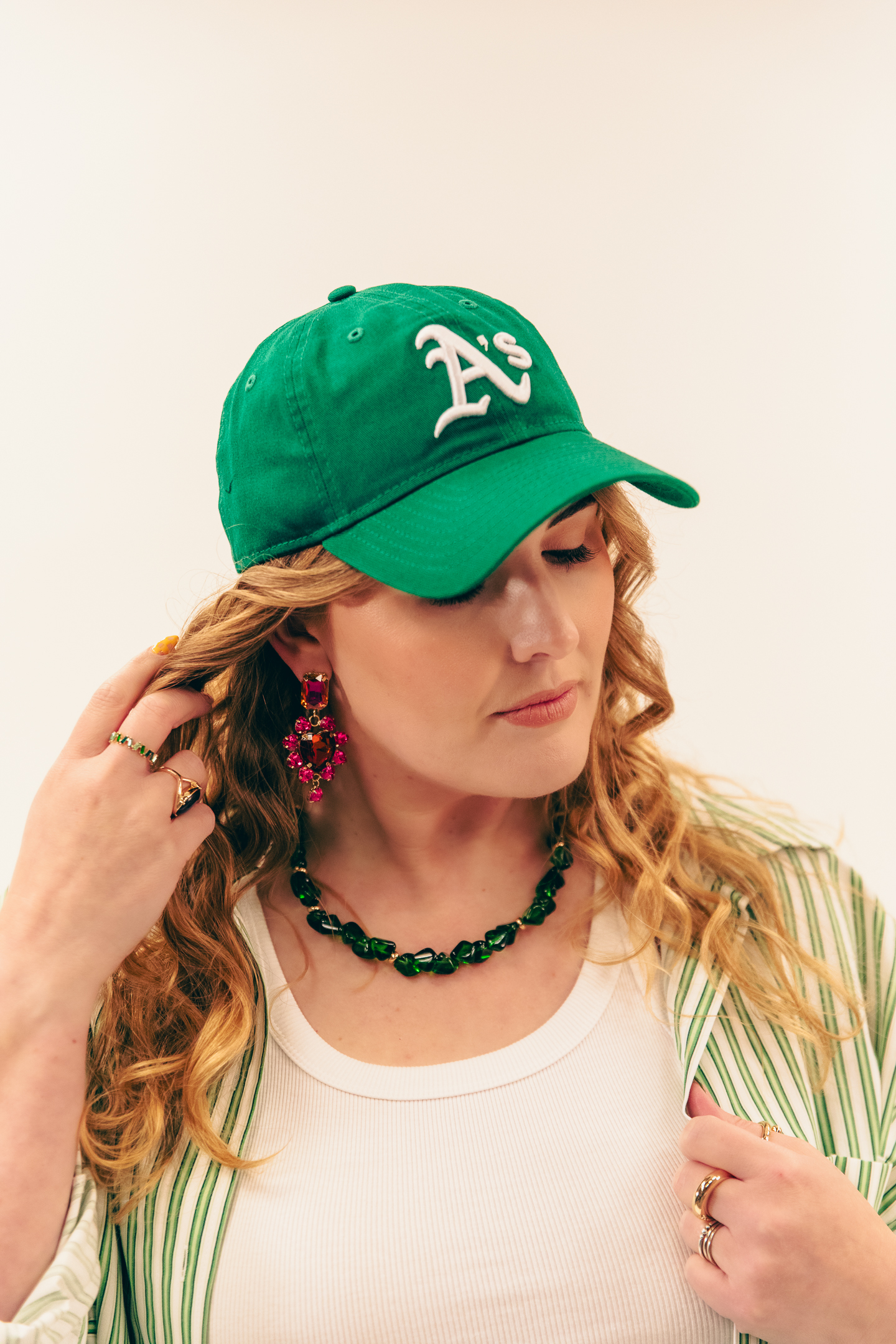
Offer Strategist & Business Coach


Over the last 5 years as a Brand & Marketing Designer, I’ve helped freaks like us design their unconventional brands so they can step onto the main stage & own their weird. Because if you wanted to be, look or sound like everyone else, you wouldn’t be where you are today. Now it’s your turn.
get to know me
New email every Thursday to make your personality roar.
SIGN UPYou’re not here because your brand needs fixing. You’re here because your brand is evolving, and it’s time to step into the centre ring. When you show up as exactly who you are, something magical happens: The right people lean in. They remember you. They choose you. And then? You succeed with Flying Colours.

All-access ticket to “turn-key” branding, website, and marketing assets for the visionary service provider
leading their industry who just needs their visuals to match their energy.

Every visionary’s best kept secret to their success – the direction and action plan that keeps them from clowning around. Let’s close the gap between your big top personality and juicy business vision.

Launch prep can feel like juggling flaming torches while riding a unicycle & your genius deserves better than spending hours fiddling with fonts and resizing images. Ditch the design stress and focus on what you do best.
.svg)
.svg)